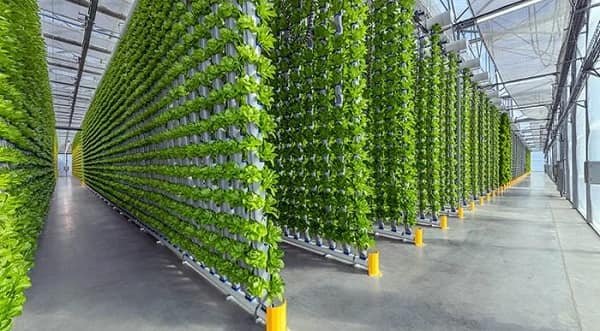
The vertical farming business is transforming modern agriculture by enabling food production in controlled indoor environments using vertically stacked growing systems. As urbanization increases and agricultural land becomes more limited, vertical farming offers an innovative solution for producing fresh vegetables, herbs, fruits, and microgreens with greater efficiency. By using technologies such as hydroponics, aeroponics, LED lighting, and climate-controlled environments, vertical farms can produce crops throughout the year while using significantly less land than conventional farming.
A vertical farming business grows crops inside warehouses, commercial buildings, shipping containers, or specially designed indoor facilities. Unlike traditional farming, vertical farms do not depend heavily on seasonal weather conditions, making production more predictable. These farms commonly supply supermarkets, restaurants, hotels, grocery stores, food processing companies, and direct-to-consumer delivery services.
Understanding the advantages and disadvantages of a vertical farming business helps investors make informed decisions about this modern agricultural opportunity.
Advantages of a Vertical Farming Business
1. Year-Round Crop Production
One of the biggest advantages of vertical farming is continuous production throughout the year.
Since crops grow in controlled environments, production is not affected by:
- Seasonal weather
- Drought
- Heavy rainfall
- Frost
- Heatwaves
This allows businesses to maintain a stable supply.
2. Efficient Land Utilization
Vertical farming maximizes production by growing crops in stacked layers.
Compared to traditional farming, it requires:
- Less land
- Smaller facilities
- Better space utilization
This makes it suitable for urban and peri-urban locations.
3. Reduced Water Consumption
Modern vertical farming systems recycle water efficiently.
Hydroponic and aeroponic systems generally use significantly less water than conventional agriculture, improving resource efficiency.
4. Higher Crop Yield
Controlled growing conditions often improve productivity.
Businesses can harvest multiple crop cycles annually while maintaining consistent quality and reducing production losses.
5. Reduced Pest Problems
Indoor farming environments reduce exposure to many outdoor pests and diseases.
As a result, businesses often rely less on chemical pesticides, producing cleaner and healthier crops.
6. Consistent Product Quality
Controlled lighting, temperature, humidity, and nutrient delivery help produce uniform crops.
Customers appreciate consistent:
- Appearance
- Freshness
- Quality
- Taste
Reliable quality supports long-term customer relationships.
7. Growing Demand for Fresh Produce
Consumers increasingly prefer:
- Fresh vegetables
- Leafy greens
- Herbs
- Microgreens
- Locally grown produce
Restaurants and supermarkets also value consistent year-round supply.
8. Business Scalability
A vertical farming business can expand by:
- Increasing growing racks
- Adding new crop varieties
- Opening multiple facilities
- Supplying institutional buyers
- Introducing direct home delivery
Scalable operations support future growth.
Disadvantages of a Vertical Farming Business
1. High Initial Investment
One of the biggest disadvantages is the large capital investment required.
Major expenses include:
- Growing systems
- LED lighting
- Climate control equipment
- Irrigation systems
- Monitoring technology
- Building infrastructure
Startup costs can be substantial.
2. High Energy Consumption
Indoor farms require continuous electricity for:
- LED lighting
- Climate control
- Ventilation
- Water circulation
- Monitoring systems
Energy expenses significantly affect operating costs.
3. Technical Expertise Required
Successful operation requires knowledge of:
- Hydroponics
- Plant nutrition
- Climate control
- Water quality
- Crop monitoring
Business owners often need specialized training.
4. Equipment Maintenance
Modern farming systems require regular servicing.
Equipment includes:
- Pumps
- Lighting systems
- Climate controllers
- Water filtration units
- Sensors
Unexpected equipment failures may interrupt production.
5. Limited Crop Variety
Although many leafy vegetables grow successfully in vertical farms, some field crops remain less suitable due to space and economic considerations.
Crop selection may therefore be more limited than in traditional agriculture.
6. Continuous Monitoring Requirements
Plants require careful supervision.
Businesses must monitor:
- Temperature
- Humidity
- Nutrient concentration
- Water quality
- Lighting schedules
Automation helps, but regular oversight remains essential.
7. Skilled Workforce Requirements
Employees should understand:
- Indoor farming systems
- Crop management
- Equipment operation
- Disease prevention
- Harvesting procedures
Training contributes to operating expenses.
8. Market Competition
Competition comes from:
- Traditional farms
- Greenhouse growers
- Organic farms
- Imported produce suppliers
Businesses must differentiate themselves through freshness, quality, and reliable supply.
Tips for Building a Successful Vertical Farming Business
A successful vertical farming business depends on efficient technology and careful planning. Consider these practical strategies:
- Conduct detailed market research before investing.
- Choose crops with strong local demand.
- Invest in reliable climate control systems.
- Monitor water quality and nutrient levels regularly.
- Use energy-efficient LED lighting.
- Develop relationships with supermarkets and restaurants.
- Implement automated monitoring systems.
- Train employees in indoor farming techniques.
- Diversify crop varieties gradually.
- Promote the freshness and local production of your products.
- Continuously evaluate operating costs to improve efficiency.
Is a Vertical Farming Business Profitable?
Yes, a vertical farming business can be profitable because demand for fresh, locally grown produce continues to increase. Year-round production, higher crop yields, premium-quality vegetables, and efficient land utilization create attractive business opportunities.
Profitability depends on energy management, crop selection, operational efficiency, customer relationships, technology adoption, and effective marketing. Businesses that maintain consistent quality while controlling operating costs often achieve sustainable long-term growth.
Conclusion
The vertical farming business represents an innovative solution for modern agriculture. Increasing urbanization, rising demand for fresh produce, technological advancements, and the need for sustainable farming practices continue to support industry growth in 2026.
Although entrepreneurs must manage challenges such as high startup investment, energy consumption, technical expertise, equipment maintenance, workforce training, continuous monitoring, limited crop selection, and market competition, the business provides numerous advantages, including year-round production, efficient land use, reduced water consumption, higher yields, consistent quality, growing consumer demand, and scalable operations.
Entrepreneurs who invest in advanced technology, efficient resource management, and strong customer relationships can build a successful and sustainable vertical farming business.
FAQs
Q: What are the main advantages of a vertical farming business?
A: The main advantages include year-round crop production, efficient land utilization, reduced water consumption, higher crop yields, lower pest pressure, consistent product quality, growing demand for fresh produce, and business scalability.
Q: What are the disadvantages of a vertical farming business?
A: Common disadvantages include high startup investment, high energy consumption, technical expertise requirements, equipment maintenance, limited crop variety, continuous monitoring needs, skilled workforce requirements, and market competition.
Q: Is a vertical farming business profitable in 2026?
A: Yes, it can be profitable because demand for fresh, locally grown vegetables and herbs continues to increase. Profitability depends on crop selection, energy efficiency, technology, operational management, customer relationships, and effective cost control.
Q: What crops can be grown in a vertical farming business?
A: Common crops include lettuce, spinach, kale, basil, mint, coriander, parsley, microgreens, strawberries, leafy vegetables, herbs, and certain specialty crops suited to indoor growing systems.
Q: How much investment is required to start a vertical farming business?
A: Investment depends on the facility size and technology used. Major expenses include growing racks, LED lighting, hydroponic or aeroponic systems, climate control equipment, irrigation systems, monitoring technology, building infrastructure, and working capital.
Q: How can a vertical farming business attract customers?
A: Businesses can attract customers by supplying fresh produce consistently, building partnerships with supermarkets and restaurants, offering direct home delivery, emphasizing pesticide-free production, promoting locally grown products, maintaining high quality, and using digital marketing.
Q: What skills are required to run a successful vertical farming business?
A: Important skills include hydroponic farming, crop management, climate control, water quality management, equipment maintenance, business planning, financial management, marketing, inventory control, and knowledge of modern agricultural technologies.