You’ve done the hard part. Someone found your store, browsed, picked a product and added it to their cart. Then they closed the tab.
If that sounds familiar, you’re in large company. Baymard Institute, which has tracked this for years, puts the average online cart abandonment rate at roughly 70% across dozens of studies. For a startup, where every visitor was expensive to win, that’s a lot of nearly-sales walking out of the door.
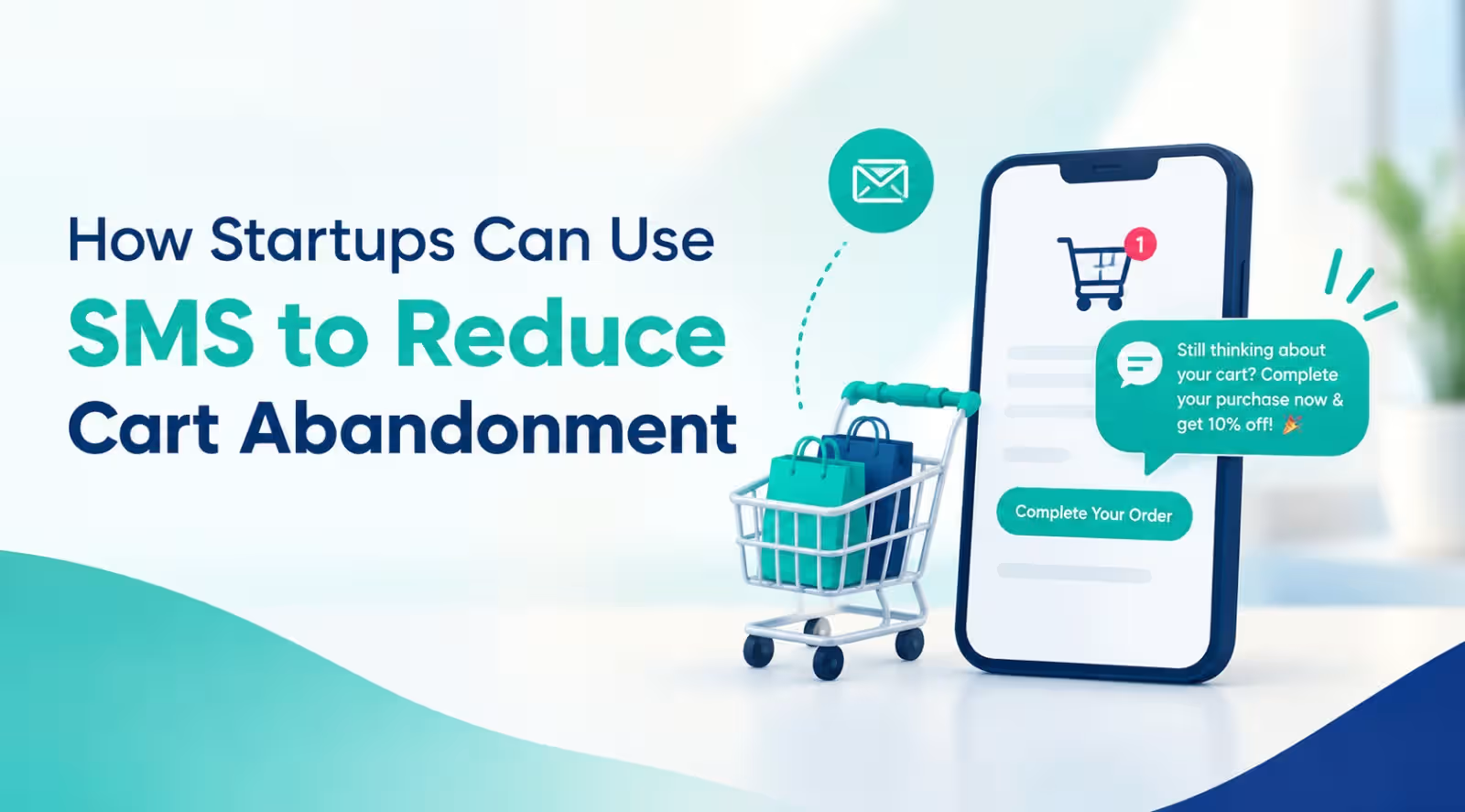
Email is the usual fix, but many shoppers, especially in India, check SMS far more reliably than their inbox. A short, well-timed text can bring a surprising number of them back. The key words there are short and well-timed. Done badly, cart SMS feels like being followed around a shop.
Here’s how to do it well.
Why people leave in the first place
Before writing a single reminder, it helps to know what you’re reminding people about. According to Baymard Institute’s checkout research, the top reasons shoppers abandon include:
- Extra costs such as shipping, taxes or fees being too high (around 48%)
- Being asked to create an account (around 26%)
- A checkout that felt too long or complicated (around 21%)
- Not trusting the site with their card details (around 18%)
Notice that an SMS can’t fix any of these on its own. What it can do is catch the shopper at a better moment, answer the doubt that stopped them, and make it easy to pick up where they left off. That’s the mindset to write with.
Step 1: Get consent and capture the number early
You can only send a cart reminder if you have the shopper’s mobile number and their permission to message them. That sounds obvious, but many startups ask for the phone number on the very last checkout step, after most people have already dropped off.
Try moving it earlier. A mobile-number-first checkout, where the shopper enters their number and verifies it with an OTP instead of creating a password, does two jobs at once. It removes the “create an account” friction that Baymard flags, and it gives you a verified number to follow up on. Add a clear, unticked opt-in for offers and reminders right there, in plain language.
Step 2: Time your messages like a person would
Think about how a good shopkeeper behaves. They don’t chase you down the street the moment you put something back. They also don’t wait a week to say “still interested?” A simple three-message sequence works for most stores:
- The gentle nudge (30–60 minutes after abandonment). No discount, just a friendly reminder with a direct link back to the cart. Many shoppers were simply interrupted.
- The helpful follow-up (around 24 hours later). Address a likely concern: free returns, delivery time, cash on delivery availability or a quick line about secure payment.
- The last call (48–72 hours later, optional). If margins allow, offer a small incentive such as free shipping. Since extra costs are the biggest reason people leave, free shipping often works better than a percentage discount.
Then stop. Three messages is plenty. If someone hasn’t come back after the third, more texts are far more likely to earn an opt-out than an order.
A few practical notes on timing: avoid sending late at night or very early in the morning, respect DND preferences, and suppress the sequence the moment the customer completes the purchase. Nothing feels clumsier than a “you left something behind” text that arrives after the order confirmation.
Step 3: Write messages people actually want to read
An SMS gives you around 160 characters, so every word has to earn its place. Some principles that hold up well:
- Lead with your brand name. Customers should know who’s texting before they read further.
- Mention the product. “Your Linen Kurta is still in your cart” lands better than “You left items in your cart.”
- Use one short, branded link. It should open the cart exactly as they left it, not your homepage.
- Sound like a person, not a system. A light, warm tone beats capital letters and exclamation marks.
- Make opting out easy. It’s required for promotional messages, and it builds trust.
For example, a first reminder might read:
Hi Priya, your Linen Kurta (size M) is still waiting in your cart at [Brand]. Pick up where you left off: [short link]. Reply STOP to opt out.
And a 24-hour follow-up:
Still deciding? [Brand] offers free 7-day returns and cash on delivery on your order. Your cart’s saved here: [short link]
One important compliance point for Indian startups: register your sender ID, templates and content category on the DLT platform before you send anything. Since October 2024, TRAI also requires any URL in your SMS to be whitelisted with the operator first, otherwise the message gets blocked. If your reminders suddenly stop converting, a non-whitelisted short link is one of the first things to check.
Step 4: Keep cart reminders separate from service messages
Cart reminders, order confirmations and OTPs might all feel like “store messages,” but they’re not the same thing, either to customers or to regulators.
OTPs, order confirmations, payment receipts and shipping updates are messages customers expect and depend on. They belong on a reliable OTP and transactional SMS route that delivers in seconds, because a checkout OTP that arrives two minutes late is itself a cause of abandonment. Cart reminders, on the other hand, usually fall under promotional or consent-based categories, since no transaction has been completed. Check the right DLT category for each template with your provider.
Keeping the two apart protects the delivery speed of your critical messages and stops promotional fatigue from bleeding into the messages customers actually rely on.
Step 5: Pick the right SMS partner
For a startup, the cheapest per-message rate is tempting, but it’s rarely the full picture. When you compare bulk SMS providers in India, look at:
- Delivery speed and reports. You need real-time delivery data to know whether a reminder actually landed.
- DLT and whitelisting support. A provider who helps you get templates and URLs approved saves weeks of back-and-forth.
- APIs and integrations. Your sequence should trigger automatically from your store, whether that’s Shopify, WooCommerce or a custom build.
- Separate routes for transactional and promotional traffic.
- Support that responds when a campaign stalls on a Friday evening.
Step 6: Measure, then improve one thing at a time
Track a handful of numbers for your cart recovery flow: delivery rate, click-through rate, recovered orders, recovered revenue and opt-out rate. Then test one change at a time, such as the timing of message one, free shipping versus a discount, or a different first line.
It’s also worth holding back a small control group, say 10% of abandoned carts, who receive no SMS at all. Some shoppers return on their own regardless. The control group tells you how many orders your SMS genuinely recovered, rather than ones that would have happened anyway.
Final thoughts
Cart abandonment will never reach zero, and that’s fine. People get distracted, compare prices and change their minds. But a large share of those abandoned carts belong to shoppers who were genuinely interested and just needed a nudge at the right moment.
For a startup, a thoughtful SMS sequence is one of the most affordable ways to win them back. Get consent, keep it short and personal, send no more than three messages, keep your OTPs and service messages on their own reliable route, and measure what actually works. Do that, and your cart page stops being a place where sales quietly disappear.