Imagine ordering a handcrafted saree from an Instagram store or a small D2C website. A few minutes later, you get an SMS with a tracking link. The parcel may finally arrive through Delhivery, DTDC, Xpressbees, Blue Dart, or another courier, even though the seller never negotiated directly with each delivery company.
That middle layer is where Shiprocket fits in.
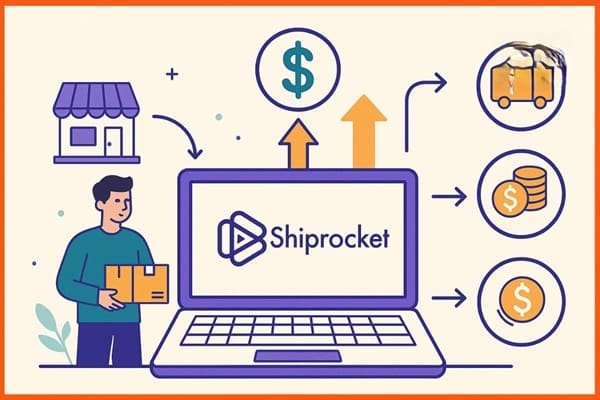
Shiprocket has grown into one of India’s largest e-commerce logistics and enablement platforms. Instead of asking a small seller to sign separate contracts with many courier companies, Shiprocket brings multiple shipping partners, tracking, COD settlement, fulfillment, cross-border shipping, checkout tools, and other merchant services into one dashboard.
The scale is already large. Shiprocket reported revenue from operations of about ₹2,024 crore in FY2025-26. In Q1 FY2026-27, revenue rose 34% year over year to about ₹592 crore.
To understand the Shiprocket business model, the key is to see what happens each time a merchant ships, stores, exports, finances, or processes an order through the platform. Let’s break down the model step by step.
1. Per-Shipment Shipping Margin: The Core Revenue Engine
The main way Shiprocket makes money is still shipping.
A small seller may not have enough parcel volume to negotiate attractive rates separately with many courier companies. Shiprocket combines demand from a large number of merchants and connects them with a wide courier network.
The seller pays according to factors such as package weight, distance, shipping mode, courier selected, and Shiprocket plan. Shiprocket then pays the courier partner according to its commercial arrangement.
The difference between what Shiprocket collects from the merchant and its underlying logistics cost helps create the shipping margin.
For example, imagine a small electronics seller shipping a parcel from Jaipur to Bengaluru. Instead of calling several couriers, the seller compares options inside Shiprocket, selects one, prints the label, and pays through the platform.
Shiprocket currently works with more than 40 courier partners and uses its CORE recommendation engine to compare cost, serviceability, pickup performance, and delivery performance.
2. Subscription Plans and Premium Seller Features
Shiprocket also earns through paid plans.
A very small seller can start on a free Lite plan. Growing merchants can move to paid Business, Advanced, or Pro plans that offer better shipping rates and additional support.
Current listed monthly prices include:
- Business at ₹199
- Advanced at ₹499
- Pro at ₹799
Pricing and benefits can change, but the idea is simple. A seller shipping only a few parcels may stay free. A D2C brand shipping hundreds of orders may pay for a higher plan because lower per-order shipping costs can save more than the monthly subscription fee.
This gives Shiprocket both recurring subscription income and usage-based shipping revenue.
3. Warehousing and Full-Stack Fulfillment
Some brands do not want to store, pack, and dispatch every order themselves.
Shiprocket Fulfillment lets merchants send inventory to tech-enabled fulfillment centers. Shiprocket then stores products, processes orders, packs them, and hands them to courier partners.
Shiprocket currently says its network includes 35 fulfillment centers across India.
A Surat saree brand, for example, can keep stock closer to customers in other regions instead of sending every parcel from Gujarat.
Depending on the merchant contract, Shiprocket can earn from:
- Storage
- Pick-and-pack work
- Inventory handling
- Order processing
- Returns management
- Shipping
This makes Shiprocket part of the merchant’s supply chain, not just a courier-booking platform.
4. Cross-Border Shipping Through ShiprocketX
ShiprocketX helps Indian sellers export products to more than 220 countries and territories.
International shipping involves carrier selection, export documentation, customs information, tracking, and higher delivery charges. ShiprocketX brings much of this process into one platform.
Imagine a Jaipur jewellery seller receiving an order from London. Instead of arranging every step independently, the merchant can use ShiprocketX for the shipment and related documentation support.
Shiprocket earns from the commercial economics around these international shipping services.
Cross-border orders can be attractive because shipping values are often much higher than ordinary domestic parcels.
5. Checkout and Conversion Tools
Shiprocket increasingly wants to earn before a parcel is created.
Its checkout product, now branded as fastrr Checkout, helps D2C websites offer faster address entry, payment options, COD controls, discounts, and estimated delivery dates.
Shiprocket management has described the platform as usage-based: merchants can pay when they send a shipment or process a checkout.
Why pay for this?
If a faster checkout helps a brand convert more shoppers and reduce abandoned carts, the fee can be worthwhile.
This expands Shiprocket from “how do I deliver the order?” to “how do I help the merchant complete the sale?”
6. Shiprocket Capital: Financing Through Lending Partners
Growing online brands often need money to buy inventory, manufacture products, or advertise before future sales arrive.
Shiprocket Capital connects eligible merchants with banks and financial companies offering revenue-based financing.
An important point: Shiprocket Capital is a lending service provider, not the lender itself. The financing is provided by regulated lending partners.
Shiprocket can earn through its sourcing, distribution, or facilitation role under commercial arrangements with those partners.
For merchants, the advantage is that their existing business and shipping activity can help make the financing process easier.
7. B2B Bulk Shipping Through Shiprocket Cargo
Not every shipment is a small consumer parcel.
A brand may need to send cartons to a distributor, move stock between warehouses, or deliver bulk goods to a retailer.
Shiprocket Cargo serves this B2B market. It offers domestic bulk and freight shipping through multiple partners, with current advertised rates starting at ₹6 per kg for eligible shipments.
Merchants pay for the freight service they use, and Shiprocket earns through the economics of aggregating cargo demand and connecting businesses with freight partners.
8. Why the Aggregator Model Works
For merchants, Shiprocket offers:
- Many courier partners through one account
- Discounted shipping rates
- Automated labels and tracking
- COD reconciliation
- Courier recommendations
- Store and marketplace integrations
Courier companies also benefit. Instead of acquiring thousands of small sellers one by one, they can receive aggregated parcel volume through Shiprocket.
The more merchants Shiprocket attracts, the more volume it can bring to logistics partners. A larger courier network then makes Shiprocket more useful to sellers.
9. What the Latest Numbers Show
Shiprocket is gradually becoming more than a shipping aggregator.
Revenue from operations rose from about ₹1,632 crore in FY2024-25 to roughly ₹2,024 crore in FY2025-26. The company still reported a net loss of about ₹79 crore, but its operating economics improved sharply compared with earlier years.
In Q1 FY2026-27, revenue reached about ₹592 crore. Core shipping contributed around ₹412 crore, while emerging businesses contributed about ₹180 crore.
Those newer businesses include omnichannel fulfillment, quick-commerce logistics, cargo, cross-border services, checkout, and marketing technology.
The strategy is clear: use shipping to acquire merchants, then sell more services to the same merchants over time.
Conclusion
Shiprocket built its business by solving a basic problem for Indian online sellers: shipping is difficult when you are too small to negotiate directly with many logistics companies.
Its core revenue comes from per-shipment economics. Shiprocket aggregates demand, offers courier choices, collects shipping charges, and earns a margin after paying logistics partners.
Subscriptions add recurring revenue. Fulfillment brings storage and order-processing income. ShiprocketX monetizes international shipping, while Cargo extends the model into bulk B2B freight.
Newer services such as fastrr Checkout and Shiprocket Capital push the company further into the merchant’s wider e-commerce journey.
In simple words, the Shiprocket business model works by connecting sellers and logistics partners on one technology platform and earning through shipping margins, subscriptions, fulfillment, cross-border logistics, cargo, checkout, and other value-added services.