Distilled water is essential for many laboratory tasks, including preparing reagents, supporting analytical procedures, maintaining instruments, and ensuring consistent experimental results. Selecting the right water distillation unit helps maintain purity, operational safety and energy efficiency across a range of laboratory environments. This guide outlines the key factors to consider when choosing a system that supports your specific laboratory water requirements.
Define Your Laboratory Water Requirements
Before selecting a unit, it is important to assess your laboratory’s daily and long-term needs. Understanding these parameters helps ensure the chosen system aligns well with your operational goals.
Water Purity Needs – Determine whether single distilled, double distilled or higher-purity water is required. Applications such as analytical chemistry, microbiology and buffer preparation often demand minimal ionic and pyrogen content.
Daily Output – Assess the volume of distilled water required per day, such as 2 L/hr, 4 L/hr or higher capacities. Selecting the correct capacity avoids shortages and prevents excessive energy use.
Application Type – General laboratory use may require standard single distillation, while sensitive analytical or biological work may benefit from double or quartz distillation systems.
Understand Types of Water Distillation Units
Different types of water distillation units offer specific advantages depending on purity requirements and laboratory usage patterns.
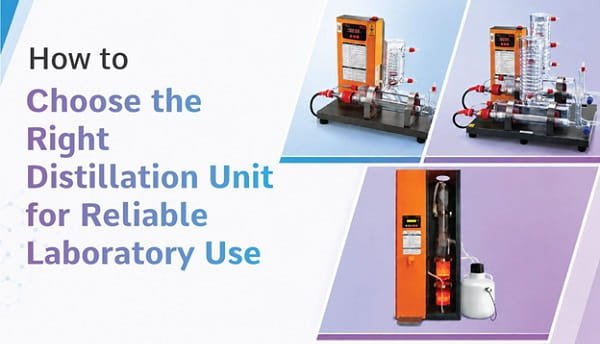
Single Distillation Units (SDU) – Suitable for routine laboratory applications, these systems provide a dependable supply of distilled water for general use.
Double Distillation Units (DDU) – Useful when further reducing ionic content and contaminants is necessary. These units ensure improved purity for sensitive testing.
Quartz Distillation Units (QCD) – Ideal for labs requiring very high purity and extremely low pyrogen content. Quartz components provide enhanced chemical resistance and stability at high temperatures.
Evaluate Materials and Construction Quality
A well-built water distillation unit ensures long service life and dependable performance. Systems constructed using corrosion-resistant metals and high-grade glass maintain structural integrity and consistent output.
Glass components made of borosilicate offer excellent thermal resistance and durability. Units crafted from high-quality borosilicate, as typically offered by leading manufacturers like Borosil Scientific, support stable distillation processes and reduce the risk of contamination or leaching.
Quartz heaters or condensers may also be used in higher-purity applications where enhanced thermal and chemical synthesis are required.
Prioritise Safety and Compliance
Safety is essential when operating heating and distillation equipment in the laboratory. Look for features that ensure secure and stable operation.
- Overheat Protection – Prevents damage to heaters and structural components.
- Low Water Level Cut-Off – Stops operation automatically to avoid heater burnout.
- Cooling Water Flow Interlocks – Prevent overheating by ensuring adequate cooling water supply.
- Proper Electrical Protection – Ensures safe operation and reduces risks associated with high-temperature processes.
These features support both user safety and equipment longevity.
Consider Operational Efficiency and Digital Features
Energy efficiency and ease of use play an important role in day-to-day laboratory operations. Modern water distillation units integrate automated features that enhance convenience and reduce energy waste.
Automatic shut-off mechanisms, flow indicators and temperature controls help maintain consistent output while reducing manual intervention. Such features are commonly found in many digitally enhanced laboratory systems from companies like Borosil Scientific, helping laboratories monitor performance and maintain safe operating conditions with minimal effort.
Efficient insulation, optimised heating designs and controlled cooling-water usage also contribute to cost-effective operation.
Assess Maintenance Needs and After-Sales Support
Routine upkeep ensures the longevity and smooth functioning of your distillation unit. When evaluating options, consider:
- Ease of Cleaning – Units designed for simple access to glassware and heaters make routine maintenance easier.
- Availability of Replacement Parts – Readily available components reduce downtime.
- Technical Assistance – Access to support for installation, troubleshooting and repairs ensures a continuous water supply in busy laboratory environments.
Conclusion
Selecting the right water distillation unit involves balancing laboratory water requirements, purity needs, safety features and operational efficiency. Well-designed systems built with durable borosilicate or quartz components support consistent output, safe usage and long-term reliability. By considering these factors, laboratories can choose equipment that enhances accuracy and improves day-to-day processes. Leading laboratory equipment providers, including Borosil Scientific, continue to support these needs through robust designs and precision-engineered systems that help maintain high standards across scientific work.