Spend a few minutes in any busy public washroom, and you’ll notice a pattern. People are careful about what they touch. Some use tissues to open doors. Some avoid certain fixtures altogether.
This didn’t use to be the case earlier. But over the last few years, expectations around hygiene have shifted quite a bit.
That’s one of the reasons why the sensor tap is no longer seen as just an upgrade. In many places, it’s slowly becoming a basic requirement.
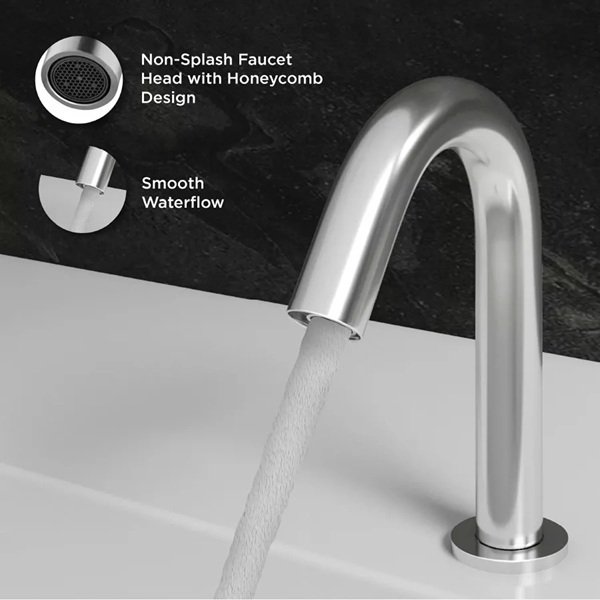
The Problem Isn’t Obvious Until You Look Closely
Manual taps don’t look like a problem at first. They’ve been around forever, and they still work.
But in a high-traffic washroom, they behave differently. The same handle gets touched again and again, often right after someone has washed their hands.
That creates a small but constant loop of contact.
The World Health Organization has repeatedly highlighted how hand hygiene helps reduce infection transmission. But that process loses its effectiveness if users end up touching contaminated surfaces again.
What Changes When You Remove That Touchpoint?
A sensor tap removes that one step completely. There’s nothing to turn, nothing to press.
You place your hands under the faucet, and water flows. Move away, and it stops.
An automatic sensor faucet works quietly in the background. Most people don’t even think about it after the first use. And that’s actually a good sign. It means the system is doing its job without effort.
Water Control Happens Without Relying on People
Here’s something that usually gets ignored.
Water wastage in commercial spaces rarely happens because of one big mistake. It’s small things. A tap left running for a few extra seconds. Someone stepping away mid-use.
Over a full day, that adds up.
The United Nations has already warned about increasing water stress globally. In that context, even small savings start to matter.
An automatic tap doesn’t depend on user behavior. It simply runs when needed and stops when not.
In Busy Spaces, Consistency Is More Useful Than Control:
Manual taps give users control, but that’s not always helpful in high-traffic environments.
Everyone uses them differently. Some open them fully, some barely. Some leave them running longer than needed.
A motion sensor faucet removes that variation. Every use follows the same pattern.
It may not sound like a big change, but in places with heavy footfall, consistency is what keeps things manageable.
Hygiene Is Also About What People Feel
There’s another side to this.
People don’t just judge hygiene based on cleaning. They judge it based on what they experience.
A sensor tap makes the space feel more controlled. There’s less hesitation while using it. No second thought about touching surfaces.
In places like hotels, airports, or premium offices, that perception matters just as much as actual hygiene.
Where This Shift Is Already Visible
You don’t have to look too hard to see where sensor tap systems are becoming common.
Airports were among the early adopters. High traffic, quick movement, minimal contact — it fits perfectly.
Hospitals rely on automatic sensor faucet setups because reducing contamination points is critical.
Malls and retail spaces are gradually moving towards automatic taps, mostly because they simplify operations.
Even office buildings are catching up, especially those aiming for better facility standards.
A Quick Note on Installation (Because This Part Gets Ignored)
Not every setup works perfectly from day one.
If the sensor range is off, the tap either becomes too sensitive or doesn’t respond properly. Both can be frustrating.
Water pressure also needs to be stable. Otherwise, the experience feels inconsistent.
And placement — that’s something people often underestimate. If the motion sensor faucet isn’t aligned properly with the basin, users have to adjust awkwardly.
What About Maintenance?
There’s a common assumption that automated systems are harder to maintain.
But in many cases, a good sensor tap actually reduces certain issues. There are no handles being turned repeatedly, so mechanical wear is lower.
Basic cleaning and occasional checks are usually enough.
Facilities using setups like the Euronics sensor tap often focus on keeping things consistent rather than fixing frequent problems.
The Bigger Shift Is in Expectations
This is probably the most important part.
Once people get used to using a motion sensor faucet, they don’t really think about it anymore. It becomes normal.
And when they come across a manual tap again, it feels slightly outdated. Not unusable, just… less convenient than expected.
Final Thoughts
A sensor tap doesn’t stand out as a major change at first. It’s subtle.
But over time, it affects how the entire space functions. Less contact, better control, and fewer small inefficiencies.
In high-traffic washrooms, those small improvements matter more than expected.
Whether it’s an automatic tap, an automatic sensor faucet, or a motion sensor faucet, the idea stays simple.
Make the system work without depending too much on user behavior.
And right now, that’s exactly what modern washrooms are moving towards.