Maintenance is one of the most overlooked yet most important aspects of daily welding operations. From clogged coolant lines to malfunctioning pumps, traditional water-cooled welding systems often demand time, resources, and careful monitoring.
That’s why many workshops and mobile service teams are now turning to the air cooled laser welder, a compact and low-maintenance alternative designed to streamline daily workflows. Air-cooled systems use built-in fans instead of water circulation, eliminating many of the maintenance challenges that slow down productivity. In this article, you’ll learn how the air-cooled design impacts reliability, upkeep, and long-term efficiency—especially for users handling light to medium-duty welding tasks.
Basics of Cooling Systems in Laser Welding
Why Cooling Matters
Laser welding generates heat at the laser source and at the weld zone. Without proper heat management, systems can:
- Lose beam quality
- Overheat internal components
- Suffer premature equipment failure
Cooling is essential for stable performance and long equipment life.
Air-Cooled vs. Water-Cooled Systems
While water-cooled welders rely on pumps, hoses, chillers, and coolant reservoirs, air-cooled systems remove heat through:
- High-speed internal fans
- Heat sinks
- Directed airflow pathways
The result is a simple, self-contained cooling method that requires far less maintenance.
What Makes Air-Cooled Systems Simpler
Integrated, Compact Design
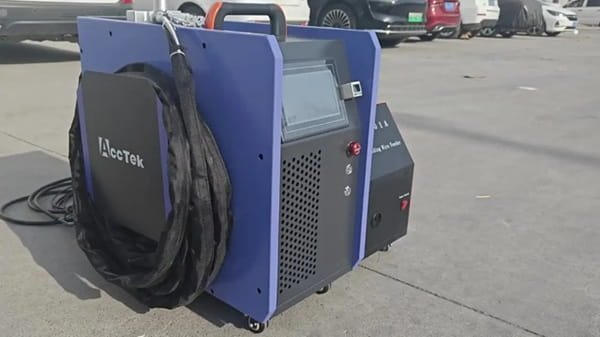
An air cooled laser welder is a single, self-contained unit. It:
- Eliminates the need for external chillers
- Reduces overall machine footprint
- Makes installation easier
- Enhances portability for multi-location work
For small workshops or companies that frequently move equipment, this compact design is a major advantage.
No Coolant, No Plumbing, Fewer Components
Air-cooled systems avoid common water-cooling issues such as:
- Coolant contamination
- Algae growth
- Hose leaks
- Pump failures
- Freezing or clogging in low-temperature environments
With no coolant tanks or filters, maintenance complexity drops dramatically. The absence of plumbing also means fewer parts that can wear out or require inspection.
Simplified Routine Maintenance
Daily or weekly maintenance tasks with an air-cooled unit primarily involve:
- Dust removal
- Cleaning fan intakes
- Clearing vents and heat sinks
There’s no need for:
- Coolant changes
- Water purity testing
- Chiller diagnostics
This simplicity helps reduce labor hours and keeps the welder ready for use with little downtime.
Operational Advantages Related to Maintenance
Easier Setup and Faster Deployment
Without an external cooling system to assemble or prime, air-cooled welders are essentially:
- Plug-and-weld devices
- Ready within minutes
- Ideal for fast deployment in emergencies or field jobs
They are especially beneficial for technicians who work in limited-space environments or frequently travel to job sites.
Lower Long-Term Operating Costs
Fewer components mean fewer expenses. Air-cooled systems reduce:
- Initial purchase cost
- Repair and replacement costs
- Utility usage
- Consumable fluid expenses
This makes them an economical choice for small fabricators, independent welders, and workshops looking to streamline operational budgets.
Sufficient for Many Daily / Medium-Duty Applications
Air-cooled lasers shine in:
- Thin-metal welding
- Moderate duty cycles
- Short-duration repair tasks
- Light fabrication work
When welding conditions do not require high continuous output, air-cooled systems maintain stable performance with almost no added maintenance burden.
Limitations and What to Monitor With Air-Cooled Systems
Cooling Capacity & Heat Management Limits
Air cooling naturally handles less heat than water systems. This affects:
- Continuous high-power operation
- Thick metal welding
- Extended duty cycles
In hot environments or fast-paced production lines, users should monitor temperatures and allow periodic cooldowns to prevent wear.
Need for Clean Airflow
Fan-based systems require unobstructed ventilation. To maintain performance:
- Keep vents clear of dust and debris
- Avoid placing the machine in tightly enclosed spaces
- Clean filters or screens regularly
Dusty workshops may require more frequent cleaning, even though overall maintenance is still simpler than water-cooled designs.
Implications for Daily Operations and Maintenance Strategy
For many operators, choosing an air cooled laser welder significantly simplifies daily workflow. Key impacts include:
- Reduced downtime: No coolant system checks or fluid replacements
- Improved mobility: Easy to move around or transport to job sites
- Faster project turnover: Quick setup and teardown times
- Predictable maintenance schedule: Mainly airflow cleaning and basic inspections
Workshops dealing with thin metals, light fabrication, or intermittent welding find these systems especially effective. Field technicians also benefit because air-cooled units can run in varied environments without relying on sensitive water-cooling infrastructure.
For many small shops and mobile welders, selecting an air-cooled unit offers the perfect balance of power, reliability, and minimal upkeep. Compact systems like the air cooled laser welder available from Denaliweld provide workshop-ready performance without the complexity of coolant-based designs. With integrated cooling and easy maintenance, these models fit seamlessly into daily operations.
Conclusion
An air cooled laser welder simplifies welding operations by removing the most maintenance-intensive parts of traditional cooling systems. With no coolant to replace, no pumps to service, and no plumbing to inspect, the only routine task is keeping airflow unobstructed.
For light to medium-duty metalwork, these systems offer stable performance, reduced operational costs, and unmatched convenience. Their portability and plug-and-play design make them ideal for workshops, field repairs, and mobile fabrication teams who need a reliable machine without constant maintenance.