Custom apparel production continues to expand as creators and businesses seek printing systems that support growth without sacrificing visual quality. Scaling output requires more than faster machines. It depends on adaptable processes that maintain consistency while allowing creative variation. Advanced direct-to-film methods respond to these needs by combining reliable print control with flexible application methods. This balance allows printing operations to grow steadily while meeting varied design demands.
Modern custom printing solutions must support small batches alongside larger production volumes. Designers expect readability, shade strength, and sturdiness throughout each piece. Advanced strategies help bridge the gap between creative motive and operational performance. By specializing in managed workflows and adaptable programs, scalable printing becomes doable without needless complexity. The following sections explain how advanced approaches support growth-focused custom printing environments.
Foundation of Scalable Printing Through Advanced Film-Based Methods
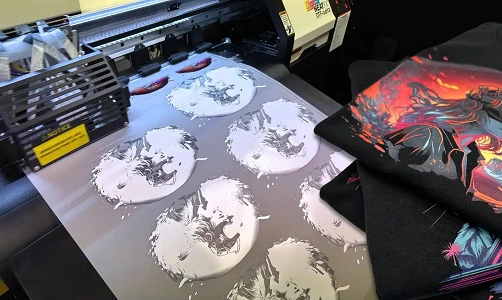
Scalable printing begins with a system that separates artwork preparation from garment application. Advanced film-based methods allow designs to be processed independently, reducing delays during production cycles. Within this approach, DTF transfers play a key role by enabling ready-to-apply artwork that remains consistent across multiple garments and production runs. This separation supports efficient scheduling while preserving visual accuracy.
The printing process allows teams to prepare designs in advance and apply them when needed. This flexibility reduces idle time and supports steady output growth. As order volumes increase, the same prepared artwork can be reused without quality loss.
Maximizing Operational Efficiency to Support Production Growth
As printing volumes increase, efficiency becomes essential for maintaining steady output. Advanced DTF techniques help organize workflows by reducing preparation delays and simplifying garment handling. These improvements allow production teams to manage higher demand without adding unnecessary complexity or strain on resources.
Workflow Optimization and Error Reduction Strategies
- Workflow planning improves through prepared artwork readiness, reducing downtime during garment processing
- Print application speed increases without sacrificing alignment precision or color accuracy
- Labor requirements remain stable while order volume expands steadily
- Production errors decline due to standardized preparation and controlled application
Ensuring Consistent Print Results Across Expanding Order Volumes
As production scales, maintaining visual consistency becomes a critical challenge. Advanced direct-to-film techniques address this by standardizing ink layering and curing processes. Each software follows the same guidance steps, ensuring repeatable effects irrespective of the extent of length. Consistency strengthens emblem reliability and purchasers consider it.
When designs appear identical across a couple of garments, a pleasant warranty becomes easier. Teams spend much less time correcting inconsistencies and extra time coping with boom. This reliability permits companies to accept large orders with confidence. Print uniformity becomes a basis for long-term scalability rather than a limiting component.
Maintaining Flexibility for High-Volume Customization
Customization often becomes difficult when production grows, yet advanced DTF methods preserve creative control. The process allows multiple design variations to move through the same workflow without interruption. This balance ensures personalization remains achievable even as order quantities expand.
Managing Design Variations within Scalable Workflows
- Individual design variations apply easily without disrupting established production routines
- Personalized graphics process alongside bulk orders without additional setup adjustments
- Artwork revisions integrate smoothly through stored film assets
- Creative options remain broad despite increasing output requirements
Reduced Production Constraints for Diverse Apparel Needs
Advanced film-based printing supports a wide range of garment materials and surface textures. This versatility removes the need for multiple printing systems. Businesses can expand product offerings without investing in separate equipment. The same method applies designs consistently across various apparel types. By reducing material-related limitations, production planning becomes simpler. Teams manage fewer variables while meeting diverse customer needs.
Durability Factors That Support Long-Term Brand Growth
Print durability plays a major role in supporting scalable printing operations. Reliable adhesion and color stability reduce the need for reprints and quality corrections. Strong print performance ensures that every garment maintains its intended appearance throughout its usage lifecycle.
Performance Metrics for High-Quality Garment Bonding
- Print adhesion remains stable through repeated use, preserving visual strength
- Color retention supports brand recognition over extended garment lifecycles
- Surface bonding resists cracking during regular movement and wear
- Finished apparel maintains a professional appearance across continued handling
Strategic Growth Through Controlled Printing Innovation
Advanced direct-to-film techniques offer a structured path for scaling custom printing operations. By focusing on consistency, adaptability, and efficiency, businesses can grow without compromising creative quality. Strategic planning combined with reliable application methods supports steady expansion. Integrating DTF transfers into scalable workflows allows printing operations to meet rising demand while maintaining visual integrity, operational balance, predictable output timelines, and stronger long term production stability across evolving custom apparel requirements.