The traditional concept of a business park, often visualised as a utilitarian cluster of grey buildings on the outskirts of a city, is undergoing a radical transformation. In the post-pandemic era, commercial real estate operators are no longer just providing square footage. They are curating ecosystems. For facility managers and property owners, the interior strategy of these spaces has shifted from a matter of basic maintenance to a critical driver of asset value and tenant retention.
As companies reassess their physical footprint, the “flight-to-quality” phenomenon has forced landlords to upgrade their offerings. A modern business park must now compete with prime city-centre locations by offering superior amenities, sustainability credentials, and interiors that foster productivity.
The Strategic Value of Interior Architecture
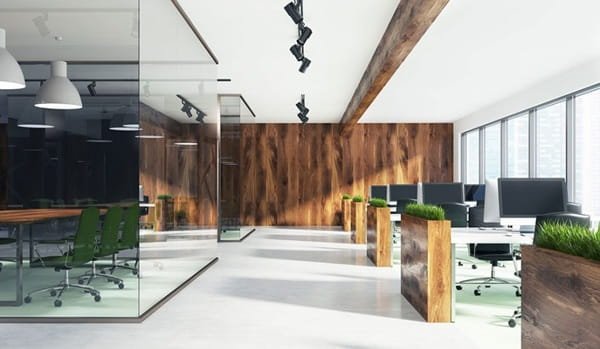
The interior environment of a commercial building is often the deciding factor for prospective tenants. While the façade draws attention, the internal layout and finish determine usability. High-growth sectors, particularly technology and finance, demand spaces that reflect their corporate culture and support hybrid working models. Tenants are no longer satisfied with simple rows of desks. They require breakout areas, quiet pods, and social hubs that replicate the comfort of home while providing professional utility.
This is particularly evident in major Asian commercial hubs where competition for top-tier global tenants is fierce. For instance, office design in Singapore has set a high standard for the region. These designs demonstrate how integrating biophilic elements, acoustic zoning, and agile workstations can turn a standard floor plate into a premium asset. By adopting similar design principles, business parks globally can elevate their perceived value to justify higher rental yields and longer lease terms.
Learning from Successful Developments
To attract multinational corporations, business parks must offer more than just connectivity and parking. They need to provide a “campus” experience. This involves a holistic approach where the interior design extends beyond individual office suites into common areas, lobbies, and shared facilities. The integration of retail and leisure zones within these parks further blurs the line between work and life, compelling employees to return to the office.
Real-world examples illustrate the success of this approach. Developments like the NRK Business Park highlight how specific design choices, such as contemporary interiors and signature office layouts, serve as key differentiators. By prioritising high-quality glass façades for natural light and integrating modern infrastructure, these properties successfully position themselves as premium destinations for corporate headquarters rather than mere back-office locations.
Market Trends Driving the Need for Upgrades
The push for revitalisation is not merely aesthetic. It is supported by hard market data. Tenants are increasingly selective, bypassing older, inefficient stock in favour of buildings that meet high environmental and wellness standards. Furthermore, strict ESG mandates from global headquarters mean that regional offices must comply with rigorous sustainability certifications, making energy-efficient interiors a non-negotiable requirement.
According to a 2025 market insight report by Savills, this “flight-to-quality” is creating a divergence in the market. The report notes that while general vacancy fluctuates, Grade A spaces in prime hubs see vacancy rates as tight as 4 to 5 per cent. This tightness is driven by tenants prioritising sustainable, high-spec environments. For business park operators, the message is clear. Investing in upgrades is essential to avoid obsolescence and capture the demand for premium space.
Key Elements of a Future-Proof Interior
For landlords looking to revitalise their assets, specific interior strategies yield the highest return on investment. These interventions should focus on flexibility and user experience.
- Modular Infrastructure: Raised flooring and moveable partitions allow tenants to reconfigure spaces rapidly without significant capital expenditure. This adaptability is crucial for businesses with fluctuating headcount projections.
- Wellness-Centric Lighting: Replacing standard fluorescent strips with circadian rhythm-compliant LED systems improves tenant wellbeing. It also reduces energy costs significantly over the asset’s lifecycle.
- Collaborative Zones: Converting underutilised corridors or lobbies into “touchdown” areas with soft seating and power outlets extends the usable workspace. These zones encourage spontaneous collaboration outside of formal meeting rooms.
- Smart Building Integration: Implementing IoT sensors for climate control and occupancy tracking allows for data-driven facility management. This ensures resources are used efficiently based on real-time usage patterns.
Conclusion
The revitalisation of commercial spaces within business parks is a complex but necessary undertaking. By shifting focus from pure capacity to quality and experience, property owners can safeguard their assets against shifting market trends. Whether through a complete refurbishment or targeted interior upgrades, the goal remains the same. Landlords must create a vibrant, productive environment that tenants are proud to call home.